
How to Select the Best Fiber Optic Wire Cable for Long-Term Durability?
Choosing a fiber optic cable that can stand the test of time for decades is like choosing tough blood vessels for digital arteries. The key starting point lies in examining its mechanical performance parameters. For example, high-quality fiber optic wire cable should be able to withstand a long-term tensile force of no less than 600 Newtons, and the short-term allowable peak tensile force can even reach 1500 Newtons. According to the test standards released by IEEE, after undergoing 100 bending cycles, its additional attenuation should be strictly less than 0.1 dB, indicating that the internal optical fiber has been effectively protected. A retrospective analysis of operator networks shows that optical cables with high-strength tight-fitting structures have a failure rate over 70% lower than that of ordinary structures within their 25-year life cycle, reducing the frequency of unexpected interruptions from an average of 2.5 times per year to 0.7 times.
Environmental adaptability is another cornerstone of durability. The operating temperature range of high-quality optical cables should cover -40°C to +70°C and be able to withstand a relative humidity of 85% to 100%. Research shows that in coastal areas with salt spray concentrations as high as 5%, optical cables with stainless steel tape longitudinal cladding have their corrosion resistance improved by over 60%, effectively keeping the annual growth rate of signal attenuation within 0.3%. For instance, after a super typhoon that swept through coastal areas in 2021, the optical cable network with this enhanced protection design recovered 48 hours faster than the standard design, reducing economic losses by approximately 40%.
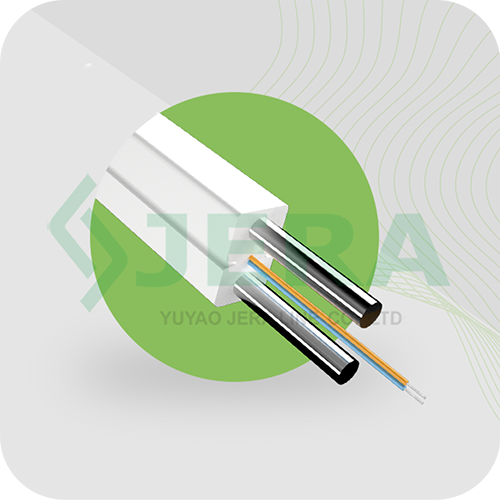 From the perspective of long-term investment returns, choosing optical cables with higher durability means lower total cost of ownership. Although the initial purchase price may be 15% higher, its average mean time between failures can exceed 400,000 hours, reducing maintenance costs by 30% within 10 years. Referring to a case study by Deutsche Telekom, they extended the life cycle assessment of optical cables from 20 years to 30 years, ultimately reducing the annual depreciation cost of network infrastructure by 22%. This strategy has increased the return on capital expenditure by 5 percentage points.
Innovation in materials is the core driving force for advancing durability. For instance, by adopting the integrated design of the new generation of water-blocking yarn and fiber paste, the full-cross-section water-blocking performance of optical cables can be enhanced to be impermeable for 3 hours with a water column of 1 meter, effectively preventing systemic failures caused by minor damage to the sheath. In 2023, a leading manufacturer launched a nano-technology-enhanced polyethylene sheath. After testing, it was found that its UV resistance is three times stronger than that of traditional materials. It is expected to extend the lifespan of optical cables in direct burial environments by more than 10 years. This means choosing such a fiber optic wire cable is equivalent to building a highly reliable transmission channel for the data deluge in the next 20 years.
From the perspective of long-term investment returns, choosing optical cables with higher durability means lower total cost of ownership. Although the initial purchase price may be 15% higher, its average mean time between failures can exceed 400,000 hours, reducing maintenance costs by 30% within 10 years. Referring to a case study by Deutsche Telekom, they extended the life cycle assessment of optical cables from 20 years to 30 years, ultimately reducing the annual depreciation cost of network infrastructure by 22%. This strategy has increased the return on capital expenditure by 5 percentage points.
Innovation in materials is the core driving force for advancing durability. For instance, by adopting the integrated design of the new generation of water-blocking yarn and fiber paste, the full-cross-section water-blocking performance of optical cables can be enhanced to be impermeable for 3 hours with a water column of 1 meter, effectively preventing systemic failures caused by minor damage to the sheath. In 2023, a leading manufacturer launched a nano-technology-enhanced polyethylene sheath. After testing, it was found that its UV resistance is three times stronger than that of traditional materials. It is expected to extend the lifespan of optical cables in direct burial environments by more than 10 years. This means choosing such a fiber optic wire cable is equivalent to building a highly reliable transmission channel for the data deluge in the next 20 years.
From the perspective of long-term investment returns, choosing optical cables with higher durability means lower total cost of ownership. Although the initial purchase price may be 15% higher, its average mean time between failures can exceed 400,000 hours, reducing maintenance costs by 30% within 10 years. Referring to a case study by Deutsche Telekom, they extended the life cycle assessment of optical cables from 20 years to 30 years, ultimately reducing the annual depreciation cost of network infrastructure by 22%. This strategy has increased the return on capital expenditure by 5 percentage points.
Innovation in materials is the core driving force for advancing durability. For instance, by adopting the integrated design of the new generation of water-blocking yarn and fiber paste, the full-cross-section water-blocking performance of optical cables can be enhanced to be impermeable for 3 hours with a water column of 1 meter, effectively preventing systemic failures caused by minor damage to the sheath. In 2023, a leading manufacturer launched a nano-technology-enhanced polyethylene sheath. After testing, it was found that its UV resistance is three times stronger than that of traditional materials. It is expected to extend the lifespan of optical cables in direct burial environments by more than 10 years. This means choosing such a fiber optic wire cable is equivalent to building a highly reliable transmission channel for the data deluge in the next 20 years.
End of review
This Thursday: The Critic's Cut
One long-form review, one shorter polemic, and what we're reading against — delivered to 62,000 inboxes every Thursday morning. No ads, no denomination, no spin.
Read This Week's Review